

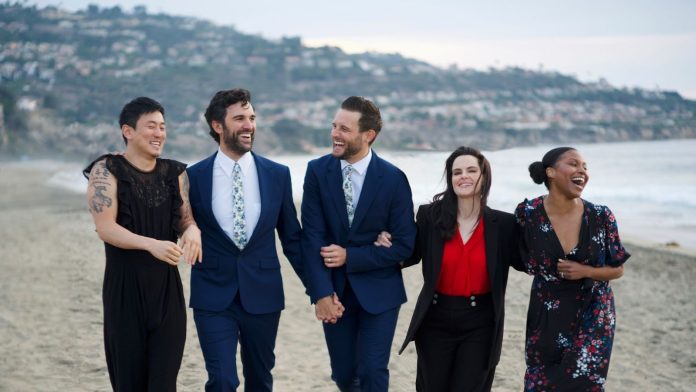

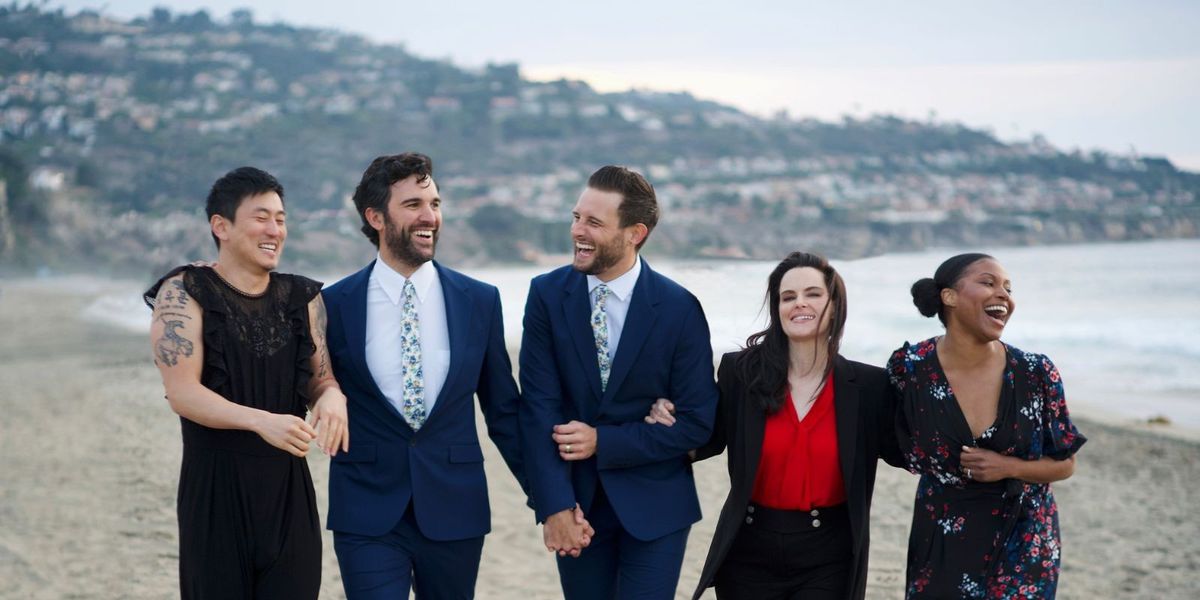
THE MATTACHINE FAMILY (Clip) – Frameline47
Editor’s Note: This interview has been edited for length and clarity.
No Film School: Congratulations on your film’s journey through the film festival circuit. It’s incredibly special, and I hope many get a chance to see it. What inspired the story, and how did you decide to turn it into a feature-length project?
Andy Vallentine: Danny has always been the writer, and I’ve been the director. We’ve been married for nearly a decade, but our creative partnership began about five years ago, after being in the industry for a while. They often advise that your first indie film should be personal, something you know intimately. We reflected on our lives and realized that some of our most challenging conversations revolved around our future—did we want children, and what would that look like?
Danny Vallentine: These discussions were a powerful way to understand our lives. I looked for films that depicted our experiences but found few that did, especially regarding men becoming parents. To fill this gap, we wrote the film, drawing heavily from our lives and conversations with friends exploring similar paths—fostering, adopting, surrogacy. The film isn’t a direct replication of our lives but reflects our questions and the new opportunities for queer families. We wanted to present a variety of queer family dynamics instead of focusing on one specific type, and that happened organically as we wrote.
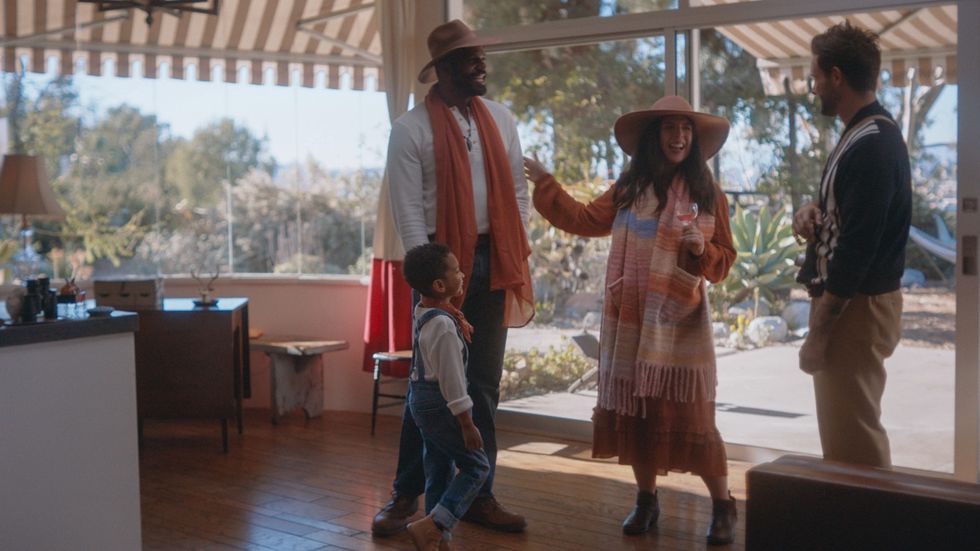
We know many ways of becoming parents: fostering, adoption, sperm donations, surrogacy. While the film doesn’t mimic our lives exactly, it reflects our questions about being queer parents and what family means. Blending the past’s notion of chosen family with modern opportunities is a major theme. It’s different for queer couples compared to straight ones, who often face fewer decisions about having children. We wanted Thomas, Nico’s character, to explore the diverse paths available to queer people.
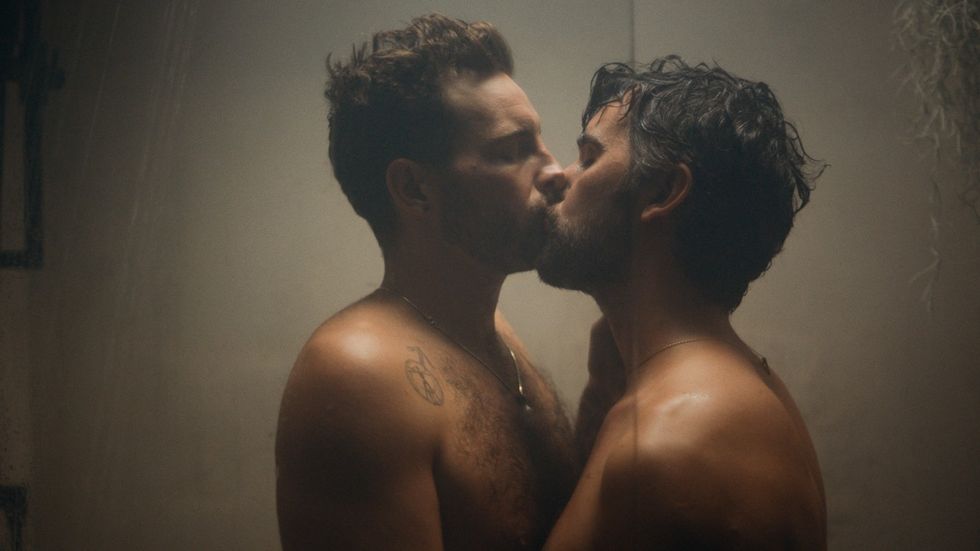
NFS: The narrative structure is unique, with classic moments interspersed with voiceover. Was this structure always part of the plan?
Danny Vallentine: We refer to them as narrative narrated sequences, and yes, they were in the script from the start. Thomas is a photographer, which naturally lent itself to incorporating photography into the film. It allowed us to explore Thomas’s perspective as someone who observes life through his camera, connected to his past and relationships through photographs.
NFS: You collaborated with Sean Cook for the film’s photography. What was that experience like?
Danny Vallentine: Sean was my college roommate at Michigan State. He is an exceptional wedding photographer in the Midwest and shot our wedding in Paris. We wanted Thomas’s photographic perspective to be distinct from ours, so Sean’s unique eye was invaluable. He spent six days on set capturing photos, which was logistically challenging but rewarding. Having someone we’ve known for so long involved was a great experience.
NFS: It seems like a family endeavor. How long was the principal photography?
Andy Vallentine: It was 20 days, with an additional pick-up day in New York for a montage with Nico. Indie films typically shoot between 15 to 25 days, so we were in the middle of that range. Filmmaking involves compromises, balancing ambitious ideas with available resources. Some days we could capture everything as envisioned, while others required shooting many pages quickly due to budget constraints.
NFS: What unexpected challenges did you face during the writing or filming process, and how did you overcome them?
Danny Vallentine: Our previous work included a short film, but most of my writing was theoretical before this. The challenge was adapting the script to fit budget and production constraints, which meant letting go of scenes I cherished. I learned to collaborate more, understanding that the final product often improves through input from actors and directors.
Andy Vallentine: Logistically, a significant challenge arose when we had to modify a scene due to budget cuts. We planned to shoot in a large mansion, but ended up filming in a motel. This required script changes, but we created something compelling within those confines, thanks to the actors’ performances.
NFS: How do you support each other creatively during difficult moments?
Andy Vallentine: Being together for almost 14 years, we know each other well. While challenges can cause us both to spiral, Danny’s presence is calming. His steadiness helps me during crises, especially when quick decisions are needed on set.
Danny Vallentine: Andy’s experience on set is reassuring. His pragmatic approach helps me see things in perspective, especially when I perceive issues as more significant than they are.
NFS: What advice would you offer to aspiring writers or directors working with trusted collaborators?
Danny Vallentine: Write the story you feel compelled to tell. When your work is deeply personal, it resonates with others. This film felt like a story only we could tell, and that authenticity touched people.
Andy Vallentine: Keep creating, even on a small scale. Our feature debut followed years of collaboration on various projects. Persistence and building relationships are crucial in achieving your filmmaking goals.
NFS: Any additional thoughts?
Andy Vallentine: Follow our journey with The Mattachine Family. We’ve been accepted into 15 film festivals and look forward to more. Stay tuned for announcements!