
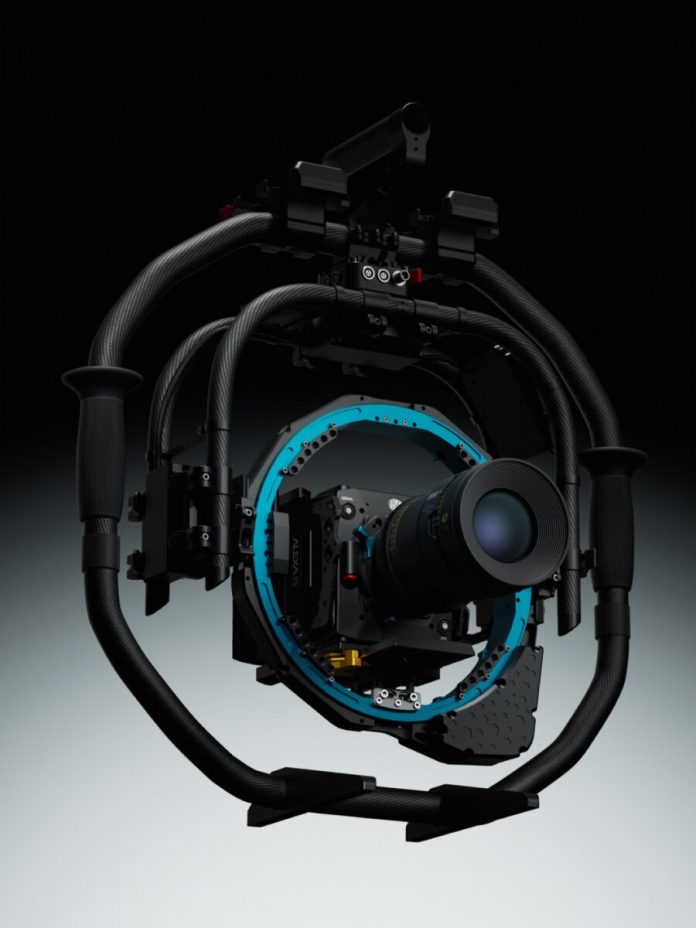

HD Air Studio, an engineering powerhouse based in Lublin, renowned for its Cyclo and Elit stabilized heads, has unveiled the HALO—a versatile three-axis gimbal system. Designed primarily for handheld use, it also boasts advanced remote-head functionalities. This innovative gimbal can support up to 15 kg (33 lb) and offers uninterrupted 360° roll and pan, facilitated by integrated power and SDI slip rings. It’s tailored for top-tier cinema setups, including the ARRI ALEXA 35, ALEXA Mini LF, and Sony VENICE 2.
The HALO enters a niche market where high-end two-handle gimbals have long been dominated by a few major players. HD Air Studio aims to position HALO as a fresh alternative for professionals seeking innovation. Developed in collaboration with experienced camera operators, the system focuses on retaining natural camera movements. However, these claims await independent verification.
Versatility: From Handheld to Remote Head
The HALO’s key selling point is its adaptability. HD Air Studio notes that a full handheld setup weighs approximately 6 kg (13.2 lb), while a head-only configuration is about 4 kg (8.8 lb). This modular design allows for quick adaptation when the gimbal is used as a remote head on cranes, car mounts, or cable rigs. This dual functionality is reminiscent of the Ronin 2’s success, making HALO a potential competitor in terms of flexibility and accessory compatibility.
Modularity is at the core of HALO’s design, with each axis configurable independently. The company asserts that the gimbal is straightforward to set up and balance—an important consideration for high-payload gimbals known for consuming valuable shooting time. However, the true ease of setup remains to be seen until operators can test it firsthand.

Significance of Payload Capacity
With a 15 kg (33 lb) payload rating, HALO enters the professional arena. For comparison, DJI’s Ronin 2 supports around 30 lb (13.6 kg), giving HALO a slight advantage. However, Freefly’s MōVI XL surpasses this with a 50 lb (22.67 kg) capacity. HALO targets the mid-to-upper range of digital cinema rigs, accommodating popular payloads like the 5, the F, and the 2, among others.
In practical terms, the payload limit is crucial when mounting additional equipment like matte boxes, lenses, follow focus motors, wireless transmitters, and monitors. Even a lightweight camera can double in weight when fully equipped, making HALO’s payload margin a key detail for prospective users once complete specifications are released.
Seamless 360° Rotation with Slip Rings
A notable technical feature is HALO’s use of integrated power and SDI slip rings for endless 360° rotation without cable tangling. Slip rings enable signal and power transmission through continuous rotation, eliminating the limitations of tethered cables. This technology, already utilized in HD Air Studio’s other products like the Cyclo heads, allows operators to execute complex shots like whip-pans and barrel rolls with ease.
Diverse Control Options
HALO offers multiple control methods, including a built-in touchscreen, a mobile app, joysticks, motion controllers, geared wheels, and third-party integrations. This wide range caters to both solo operators and professional two-person remote-head setups. The inclusion of wheel control and compatibility with third-party systems indicates HD Air Studio’s intent to appeal to the professional market.
However, details about the remote operation’s range, latency, and radio system are currently unavailable, which are crucial factors for operators comparing HALO to established wireless remote-head solutions.
About HD Air Studio
HD Air Studio is not new to the industry. With 17 years of experience, the company has produced over 1,000 gimbals and stabilized heads for users in 65 countries. Its portfolio includes models like the Cyclo Lite and Cyclo 1, as well as the Elit gyro head for heavier cameras, all manufactured in Poland. This extensive background in stabilization systems positions HD Air Studio as a credible player in the market.

The HALO is still in development, and pricing or shipping details remain undisclosed. Interested parties can sign up for technical updates and potential beta-testing opportunities through HD Air Studio’s website. Full specifications, including weight, materials, motor torque, and battery details, are pending release and will be crucial for potential buyers evaluating the HALO against market leaders.
Will this European-engineered system challenge the dominance of the Ronin 2 and MōVI XL in the high-capacity gimbal market? Share your thoughts in the comments below!