
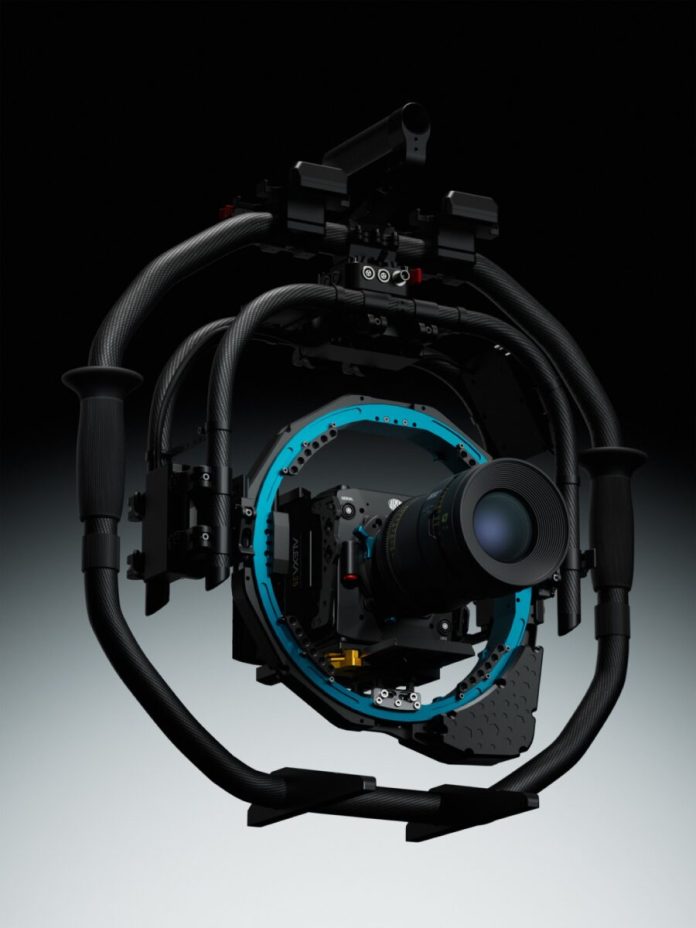

Renowned for their innovative Cyclo and Elit stabilized heads, the engineering team at HD Air Studio in Lublin has unveiled their latest creation: the HALO modular three-axis gimbal. Designed primarily as a handheld system with extensive remote-head capabilities, this sophisticated gimbal can handle up to 15 kg (33 lb), offering seamless 360° roll and pan thanks to its integrated power and SDI slip rings. It’s targeted at cinema setups featuring the ARRI ALEXA 35, ALEXA Mini LF, and Sony VENICE 2.
The HALO enters a largely unchanged segment of high-payload, two-handle gimbals, aiming to provide a fresh alternative to long-dominant models like the 2 and the L. With insights from professional camera operators, HD Air Studio has focused on maintaining the natural movement of the footage, rather than completely eliminating it—though these claims remain to be verified independently.
A Versatile System for Both Handheld and Remote Operations
HALO boasts a flexible design, with a complete handheld setup weighing about 6 kg (13.2 lb) and a stripped-down head-only version at approximately 4 kg (8.8 lb). This adaptability means it can easily transition to a remote head when mounted on cranes, vehicles, or cables—a dual functionality that echoes the popularity of the Ronin 2. However, HALO will need to prove itself against competitors with established accessory ecosystems.
Modularity is key here, allowing each axis to be individually configured. HD Air Studio emphasizes HALO’s ease of setup and balance, which is particularly crucial for high-payload gimbals that often consume valuable shooting time. The true efficiency of balancing remains uncertain until operators can test the system firsthand.

The Critical Importance of Payload Capacity
The HALO’s 15 kg (33 lb) payload capacity places it firmly within the professional category. For comparison, DJI’s Ronin 2 supports up to 30 lb (13.6 kg), giving HALO a slight edge in headroom. Meanwhile, the Freefly MōVI XL accommodates up to 50 lb (22.67 kg), indicating HALO’s focus on the middle-to-upper range typical of most digital cinema setups. This capacity is essential when accounting for additional equipment like matte boxes, lenses, and monitors, where total weight can significantly increase.
Seamless 360° Movement with Integrated Slip Rings
Featuring built-in power and SDI slip rings, the HALO enables continuous 360° roll and pan without cumbersome cable wraps. Slip rings allow uninterrupted power and signal transfer through rotating joints, freeing operators to execute smooth whip-pans and barrel rolls without cable constraints—a design approach HD Air Studio has successfully applied in its other products.
This capability allows operators to achieve the kind of dynamic shots that remote heads are designed to facilitate, enhancing creative possibilities on set.
Diverse Control Options and Professional Integration
The HALO offers various control options, including a touchscreen, mobile app, joystick, motion controller, geared wheels, and compatibility with third-party systems. This flexibility caters to both solo operators and two-person wheel setups typical of high-end remote heads. The inclusion of wheel control and professional integrations emphasizes HD Air Studio’s focus on serving the professional market rather than targeting casual users.
However, specific details regarding transmission range, latency, and the radio system remain undisclosed, factors critical to evaluating HALO against well-established wireless remote-head systems.
The Legacy of HD Air Studio
With a history dating back to 2009, HD Air Studio is no stranger to the industry. They claim to have delivered over 1,000 gimbals and stabilized heads across 65 countries. Their product lineup includes the Cyclo Lite and Cyclo 1 heads, geared towards Steadicam operators, and the Elit gyro head for cameras up to 20 kg (44 lb), all manufactured in Poland. This European Union-based production is a notable advantage in today’s market.
The company’s expertise in aerial and gyro-stabilized systems lends credibility to HALO, which aims to bridge the gap between handheld gimbals and remote heads. Whether HALO can challenge established competitors remains to be seen and will depend on real-world testing and a commercially available version.

Currently in development, HALO’s pricing and availability have yet to be announced. HD Air Studio is offering a sign-up for updates and beta access, with eventual pricing listed in EUR, USD, and PLN. As full specs become available, prospective buyers will want to compare them to existing market options before making any decisions. For more information and updates, interested parties can register on the company’s website.
Could this expertly crafted European system finally offer strong competition to the aging Ronin 2 and the robust MōVI XL in the cinema payload class? Share your thoughts in the comments below!